
Germany has emerged as one of Europe’s foremost destinations for skilled professionals seeking international career opportunities. Thanks to its robust economy, world-class industries, and structured immigration pathways, the Germany skilled worker visa and EU Blue Card system make it easier than ever for non-EU nationals to work, live, and build long-term careers in Germany.
In this comprehensive guide, you’ll learn everything you need to know about Germany skilled immigration, including requirements, application steps, the EU Blue Card, and key benefits for highly qualified workers in Germany.
What Is the Germany Skilled Worker Visa?
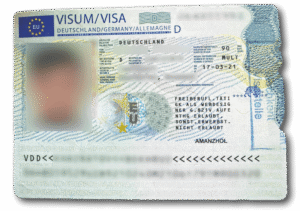
The Germany skilled worker visa is a residence permit designed for non-EU professionals with formal job offers in Germany. It enables you to enter Germany legally and take up employment in your field of expertise once your qualifications and job offer meet German immigration standards.
Under German immigration law, there are several pathways for skilled workers, including:
Residence permit for qualified professionals seeking a job
Settlement permits for highly-qualified workers
EU Blue Card for highly skilled talent
Each immigration route serves a distinct purpose but ultimately leads to working and living in Germany for free.
EU Blue Card — Premium Pathway for Highly Skilled Professionals
The EU Blue Card is a specialized residence and work permit tailored for highly qualified workers from outside the EU. It’s widely regarded and accepted by the European Commission as Germany’s most advantageous route for non-EU talent.
Key features of the EU Blue Card:
- Must have a binding job offer or employment contract in Germany
- Your degree must be recognised as equivalent to a German university degree (or comparable)
- Employers may hire you without a labour market priority check
- Valid for up to 4 years, depending on the contract duration
- You can bring family members more easily
- Mobility to other EU Member States after 12 months
To qualify for the EU Blue Card, the salary offered must meet Germany’s minimum thresholds (for example, around €45,300 annually, or a lower threshold for shortage occupations such as IT, engineering or healthcare).
Skilled Worker Visa Requirements in Germany
- Before applying for a Germany skilled worker visa, you must satisfy several key criteria:
- Recognised qualification – university or professional qualification recognised in Germany or equivalent to a German degree.
- Valid job offer – must be relevant to your qualifications.
- Health insurance – proof of coverage is required.
- Passport and documentation – including proof of accommodation and sufficient funds.
Can I migrate to Germany without a work Visa?
According to the the Migration and Home Affairs of the European Commission, If you don’t yet have a job offer, Germany offers a residence permit for qualified professionals that allows you to stay for up to 6 months to look for work. You can then convert this permit into a long-term work residence once you secure employment.
How to Apply for a Skilled Worker Visa or EU Blue Card
Here’s a step-by-step overview:
Check your qualification equivalence (e.g., through the ANABIN recognition system)
Secure a job offer or employment contract from a German employer
Apply for a visa (if required) at the German embassy or consulate in your home country
Enter Germany and apply for the residence permit or EU Blue Card at the local immigration office after arrival
How Long Can You Stay & Work?
EU Blue Card holders can stay and work in Germany for up to 4 years initially.
After 33 months of employment (or 21 months with B1 German language proficiency), you can apply for a national settlement permit (permanent residency).
If you hold a visa solely for job search, its validity is typically for 6 months.
Benefits of the Germany Skilled Worker Visa
✔ Work and live in one of Europe’s strongest economies
✔ Potential path to permanent residency and long-term settlement
✔ Access to world-class jobs in tech, engineering, healthcare, and research
✔ Easier family reunification for spouses and children
✔ Freedom to change employers under certain conditions
Final Word
Germany’s structured immigration system—especially the Germany skilled worker visa and EU Blue Card—makes it easier for skilled professionals from outside the EU to build rewarding careers in Europe. With clear rules, competitive salary requirements, and pathways toward long-term residence, Germany remains a top destination for global talent seeking growth and opportunity.
See here for full information from the Migration and Home Affairs of the European Commission